

What is the force - displacement characteristic of a parker cylinder?
Jul 21, 2025
As a supplier of Parker cylinders, I've had the privilege of delving deep into the technical aspects of these remarkable hydraulic components. One of the most crucial aspects to understand when dealing with Parker cylinders is their force - displacement characteristic. This characteristic is fundamental in determining how a cylinder will perform in various applications, and it can significantly impact the efficiency and effectiveness of hydraulic systems.
Understanding Force - Displacement Basics
Before we dive into the specifics of Parker cylinders, let's first establish a basic understanding of force - displacement characteristics. In a hydraulic cylinder, force is the output push or pull that the cylinder can generate, while displacement refers to the linear movement of the piston rod within the cylinder. The relationship between these two variables is not always straightforward and can be influenced by several factors, including the design of the cylinder, the pressure of the hydraulic fluid, and the load applied to the cylinder.
The force generated by a hydraulic cylinder is calculated using the formula (F = P\times A), where (F) is the force, (P) is the pressure of the hydraulic fluid, and (A) is the effective area of the piston. This means that the force output of a cylinder is directly proportional to the pressure of the hydraulic fluid and the size of the piston. As the pressure increases, so does the force, and a larger piston area will also result in a greater force output.
Displacement, on the other hand, is determined by the stroke length of the cylinder and the volume of hydraulic fluid that is pumped into or out of the cylinder. The stroke length is the maximum distance that the piston rod can travel within the cylinder. When hydraulic fluid is pumped into the cylinder, it causes the piston to move, and the amount of movement is directly related to the volume of fluid added.
Force - Displacement Characteristics of Parker Cylinders
Parker cylinders are known for their high - quality construction and precise engineering, which results in consistent and predictable force - displacement characteristics. These cylinders are designed to operate under a wide range of pressures and loads, making them suitable for a variety of applications.
One of the key features of Parker cylinders is their ability to maintain a relatively constant force throughout the stroke. This is achieved through careful design of the piston and cylinder bore, as well as the use of high - quality seals and materials. In many applications, a constant force output is essential for ensuring smooth and efficient operation. For example, in a manufacturing process where a cylinder is used to press or form a part, a consistent force will result in a more uniform product.
However, it's important to note that the force - displacement characteristic of a Parker cylinder can be affected by external factors such as friction and the load applied. Friction within the cylinder can reduce the effective force output, especially at low speeds or when the cylinder is operating under high loads. To minimize friction, Parker uses advanced sealing technologies and high - quality materials in their cylinders.
The load applied to the cylinder also plays a significant role in its force - displacement characteristic. If the load is too high, the cylinder may not be able to move the piston rod through its full stroke, or it may require a higher pressure to achieve the desired movement. Parker provides detailed specifications for each of their cylinders, including the maximum load capacity, to help users select the appropriate cylinder for their application.
Different Types of Parker Cylinders and Their Force - Displacement Characteristics
Parker offers a wide range of cylinders, each with its own unique force - displacement characteristics. Let's take a look at some of the popular models:
35Z - 1 Cylinder
The 35Z - 1 Cylinder is designed for applications that require a high - force output in a compact package. This cylinder has a relatively short stroke length, which means that its displacement is limited compared to some other models. However, it can generate a significant amount of force due to its large piston area and the ability to operate at high pressures. The force - displacement curve of the 35Z - 1 cylinder shows a steep increase in force at the beginning of the stroke, which then levels off as the piston reaches the end of its travel. This makes it ideal for applications such as clamping or pressing, where a high initial force is required.
LTR Cylinder
The LTR Cylinder is a long - stroke cylinder that is suitable for applications that require a large displacement. It has a smaller piston area compared to the 35Z - 1 cylinder, which means that it generates less force per unit of pressure. However, its long stroke length allows it to cover a greater distance, making it ideal for applications such as material handling or positioning. The force - displacement characteristic of the LTR cylinder is more linear, with a relatively constant force output throughout the stroke.
2HP Cylinder
The 2HP Cylinder is a high - performance cylinder that is designed for applications that require both high force and high speed. This cylinder has a unique design that allows it to operate at high pressures and achieve a fast stroke speed. The force - displacement curve of the 2HP cylinder shows a rapid increase in force at the start of the stroke, followed by a relatively constant force output as the piston moves through the middle of the stroke. At the end of the stroke, the force may decrease slightly due to factors such as fluid compressibility.
Factors Affecting Force - Displacement Characteristics
In addition to the design of the cylinder itself, there are several other factors that can affect the force - displacement characteristic of a Parker cylinder. These include:
Hydraulic Fluid Properties
The properties of the hydraulic fluid, such as its viscosity and compressibility, can have a significant impact on the performance of the cylinder. A fluid with a high viscosity may cause increased friction within the cylinder, which can reduce the force output and slow down the displacement. Compressibility of the fluid can also affect the force - displacement characteristic, especially at high pressures. Parker recommends using high - quality hydraulic fluids that are specifically designed for use in their cylinders to ensure optimal performance.
Temperature
Temperature can also affect the force - displacement characteristic of a Parker cylinder. As the temperature increases, the viscosity of the hydraulic fluid decreases, which can lead to reduced friction and improved displacement. However, high temperatures can also cause the seals and other components in the cylinder to degrade, which can affect the performance and reliability of the cylinder. On the other hand, low temperatures can increase the viscosity of the fluid, making it more difficult for the cylinder to operate.
Installation and Alignment
Proper installation and alignment of the cylinder are crucial for ensuring accurate force - displacement characteristics. If the cylinder is not installed correctly, it may experience uneven loading, which can cause premature wear and affect the force output. Misalignment can also lead to increased friction and reduced displacement. Parker provides detailed installation instructions for their cylinders to help users ensure proper installation and alignment.
Importance of Understanding Force - Displacement Characteristics
Understanding the force - displacement characteristic of a Parker cylinder is essential for several reasons. Firstly, it allows users to select the right cylinder for their application. By knowing the required force and displacement, users can choose a cylinder that is capable of meeting their specific needs. This can help to improve the efficiency and performance of the hydraulic system, as well as reduce the risk of premature failure.
Secondly, understanding the force - displacement characteristic can help with system design and optimization. By analyzing the force - displacement curve of a cylinder, engineers can determine the optimal operating conditions for the system, such as the required pressure and flow rate of the hydraulic fluid. This can lead to more energy - efficient systems and reduced operating costs.
Finally, knowledge of the force - displacement characteristic can help with troubleshooting and maintenance. If a cylinder is not performing as expected, understanding its force - displacement curve can help to identify the problem. For example, if the force output is lower than expected, it may be due to a problem with the hydraulic fluid, the seals, or the pressure source.
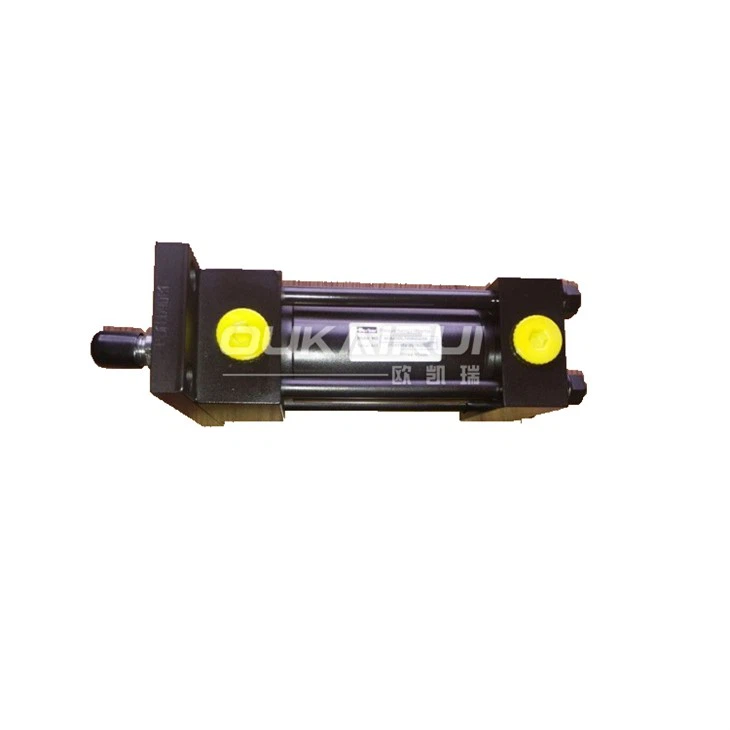

Contact for Purchase and Consultation
If you're in the market for Parker cylinders or need more information about their force - displacement characteristics, I'm here to help. As a trusted supplier of Parker cylinders, I can provide you with detailed product information, technical support, and assistance in selecting the right cylinder for your application. Whether you're working on a small - scale project or a large - scale industrial application, I have the expertise and resources to meet your needs.
Please feel free to reach out to me to start a discussion about your requirements. I look forward to helping you find the perfect Parker cylinder solution for your hydraulic system.
References
- Parker Hannifin Corporation. Hydraulic Cylinder Product Catalog.
- Fluid Power Handbook. Various Authors.