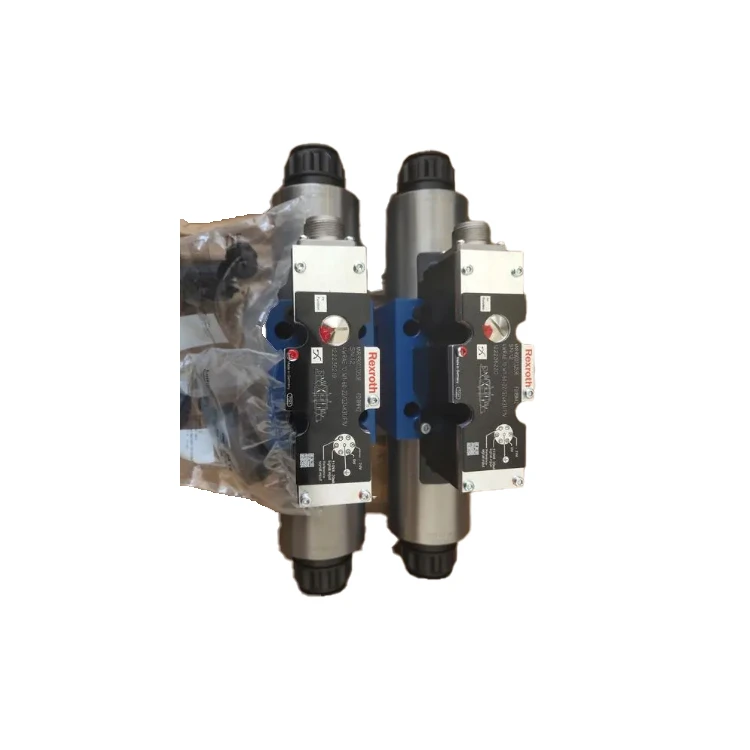
Hydraulic Valve

Your Professional Hydraulic Valve Supplier


Our goal is to become your true partner in the field of hydraulic valve in China. Fujian Okairui Fluid Technology Co., Ltd. (hereinafter referred to as Okairui), founded in 2013, the core members of the company have rich experience in technology, management and entrepreneurship. We have a skilled engineering team dedicated to refining every stage, from product development and process improvement to production oversight, ensuring every product delivered meets rigorous quality and performance standards. The price is competitive and the product is quality-assured, which is a good choice for your long-term cooperation.


First 1234567 Last 1/9

 
Why Choose Us


Product application

Our products include hydraulic pumps, hydraulic motors, hydraulic valves and hydraulic systems, which are widely used in construction machinery, agricultural machinery, marine equipment, offshore applications and other industries.


Our customization

Our products are the ideal choice for various industries, and we can also customize them according to the specific needs of customers for different applications.


Our services

In the pre-sales stage, our team of experts will recommend the most suitable products according to the needs of customers and provide detailed technical consultation. During the sales period, we ensure timely delivery and provide installation guidance. For after-sales, we provide long-term technical support, warranty services and spare parts to help customers maximize the use of products and get reliable maintenance during use.


4WRE6 Rexroth Valve


Advantages of Hydraulic Valve

Hydraulic valves have a simple and compact structure: Hydraulic valves are small enough to fit into corners and places that are difficult to access. They can fit into your pipeline at almost any point and won’t take up extra space once installed.


Smooth and reliable hydraulic transmission: Hydraulic systems offer the silky-smooth fluidity of liquid power transmission, so you can depend on a tight-sealing hydraulic valve for years to come.


Large output torque: Hydraulic power means extra power. Having more torque in valve actuation means that hydraulic valves can service fast flow rates and overcome high pressures easily.


Adjustable output torque: The output torque can be precisely adjusted by the constant pressure relief valve, including the adjustment of opening and closing torque, which can even be directly reflected by the hydraulic meter.


Convenient speed regulation: Regulating the flow rate is another important advantage of hydraulic valves. If your application demands articulate actuation and precise flow regulation, you should consider using hydraulic valves.


Types of Hydraulic Valve


01
 

Directional control valves

Directional spool valvesas the name suggests, directional control valves are used to direct the flow of fluid through the system. These valves can control the start, stop, pause, and change in direction of flow of a pressure medium. For this reason, they are also referred to as switching valves.

 
02
 

Hydraulic pressure control valves

Pressure control valves are the most common valves for controlling pressure. They include relief, reducing, sequence, counterbalance, and unloading valves. The hydraulic pressure control valve plays a vital role in preventing the leakage and bursting of pipes or tubing. Pressure control valves regulate the pressure of the fluid passing through the pipe or tubing by releasing the excess pressure. These valves maintain the pressure as entered manually by the operator.

 
03
 

Hydraulic flow control valves

The purpose of flow control in a hydraulic system is to regulate speed. Flow control valves control the speed of an actuator by regulating the flow rate. Flow rate also determines the rate of energy transfer at any given pressure in a system.

02


Specification of Hydraulic Valve


Size

2",3",4",6"

Working pressure range

0.35-10bar

Pressure adjustment range

0.8-6.5bar

Connection method

Internal thread / flange

Pressure adjustment range

0.08-0.65mpa


Application of Hydraulic Valve

Manufacturing and automation

Hydraulic valves are integral to industrial machinery and automation systems, where they control the movement of robotic arms, conveyor systems, and machine tools with precision and efficiency.

Construction and earthmoving equipment

Hydraulic valves power the hydraulic systems of construction machinery, such as excavators, loaders, and bulldozers, enabling precise control over lifting, digging, and material handling operations.

4WRA6 Rexroth Valve
4WRE10 Rexroth Valve

Aerospace and defense

Hydraulic valves are used in aircraft and military vehicles to control landing gear, flight control surfaces, and weapon systems, ensuring safe and reliable operation in demanding environments.

Automotive and transportation

Hydraulic valves play a vital role in automotive braking systems, power steering systems, and suspension systems, providing responsive and reliable control over vehicle dynamics and safety features.


Parts of a Hydraulic Valve


Valve body

The main body of the valve, usually made of steel or cast iron, to provide a connection point for the hydraulic pipeline.

01

Control spool

Control valve body moving parts, by opening, closing part of the blocked path to guide the flow of hydraulic fluid.

02

Actuator

The mechanism used to move the spool or lift the spool. It can be manual: Lever or handwheel operation.

03

Seals and o-rings

Ensure that hydraulic fluid does not leak from the valve.

04

Spring

The spring is generally used to return the spool to its initial position after the actuator force has been removed.

05


Installation Requirements of Hydraulic Valve


The surface roughness of the hydraulic press valve mounting seat should be less than Ra16μm·1 and the surface roughness should not be greater than 0.025mm. When installing the hydraulic press valve, check whether there is any dirt on the installation surface of the following items, whether the O-ring is in good condition at the inlet and outlet, and whether the positioning pin hole is correct.


When installing the valve on the connecting plate, the connecting screws should be tightened evenly; Before turning on the circuit, pay attention to check the terminal. After a normal build, enter the polarity check. It is not allowed to use magnetic materials to make the mounting seat, and there is no obvious magnetic field interference around the valve. Before installing the valve, do not switch the zero adjustment device at will.


Production Process of Hydraulic Valve
DBE10 Rexroth Valve
4WE6 Rexroth Valve
DSG-01 Yuken Valve
EFBG-03 Yuken Valve

Design & manufacturing: The production of hydraulic valves begins with careful design and raw material selection. The product in process then go through precision machining, assembling and welding before being completed.


Parts inspection: Each part undergoes rigorous material testing, dimensional inspection and surface treatment inspection to ensure compliance with requirements and ensure the quality of the product.


Assemble: Tested parts are assembled to ensure proper installation of components such as solenoids, seals, pistons and valve bodies.


Functional testing: Conduct comprehensive testing and fluid flow testing to evaluate switching action and fluid control performance, and verify the function and stability of oil pressure valves.


Leak detection: A series of precision tests such as leak detection and pressure holding test are carried out using imported machines from italy to ensure the performance of the hydraulic valve and maintain its integrity.


Performance test: Flow test, pressure test, back pressure test, etc. Are carried out to verify the performance and function of the hydraulic valve under different working conditions.


Calibration and debugging: Calibration and commissioning according to requirements to ensure the accuracy and stability of the hydraulic valve under different parameters and different working conditions.


Marking and packaging: Tested and approved hydraulic valves are identified and packaged, including important information such as models, specifications and batch numbers, to meet shipping and storage requirements.


Packing and Shipping of Hydraulic Valve


Packing

Wooden box

Shipping

Shipped by road, sea, rail


FAQ


Q: What is a hydraulic valve?

A: A hydraulic valve properly directs the flow of a liquid medium, usually oil, through your hydraulic system. The direction of the oil flow is determined by the position of a spool. A hydraulic system can only function - as per requirements - by using valves.

Q: What is a 4 way hydraulic valve?

A: The 4-Way Directional Valve block represents a directional control valve with four ports and three positions, or flow paths. The ports connect to what in a typical model are a hydraulic pump (port P), a storage tank (port T), and a double-acting actuator (ports A and B).

Q: How does a hydraulic valve work?

A: The ball has a hole through the center, and when the handle is turned, the hole is aligned with valve openings in order to permit flow. In order to shut off the flow, the handle is used to turn the hole perpendicular to the valve openings, which obstructs the flow.

Q: What is the most common cause of hydraulic valve failure?

A: The most common source of mechanical hydraulic valve failure is due to extended hydraulic fluid contamination, resulting in the hydraulic fluid and filters being replaced.

Q: How to adjust a hydraulic control valve?

A: Removing the locking nut gives you access to the adjustment screw. Turn the screw clockwise to raise the pressure, and twist it counter-clockwise to lower the pressure. Use a pressure gauge to ensure you create the ideal pressure adjustment before replacing the locking nut and putting the spool valve back into place.

Q: What does n mean on a hydraulic valve?

A: “A” & “B” Ports: These are your work ports that connect to your cylinders or hydraulic motor. “N” Port: Used for closed center plug or attaching multiple valves in a row (power beyond plug required).

Q: What is the working principle of hydraulic valve?

A: Fluid follows a specific path, entering through an inlet whose size is controlled by a pressure compensator, such as a compensator spool. This spool, typically spring-loaded, adjusts the inlet size to ensure a consistent volumetric flow rate, even in the presence of pressure drops within the system.

As one of the leading hydraulic valve manufacturers and suppliers in China, we warmly welcome you to wholesale hydraulic valve for sale here from our factory. All our products are with high quality and competitive price.

variable motor, hydraulic vane pump

(0/10)

clearall