

What is the difference between a piston motor and a vane motor?
Sep 05, 2025
In the realm of hydraulic systems, the choice between a piston motor and a vane motor can significantly impact the performance, efficiency, and cost - effectiveness of a machinery operation. As a piston motor supplier, I am often asked about the differences between these two types of motors. In this blog post, I will delve into the key distinctions between piston motors and vane motors, exploring their working principles, performance characteristics, applications, and more.
Working Principles
Piston Motors
Piston motors operate based on the reciprocating motion of pistons within cylinders. There are different types of piston motors, such as axial - piston motors and radial - piston motors. In an axial - piston motor, the pistons are arranged parallel to the drive shaft. The high - pressure hydraulic fluid enters the motor and acts on the pistons, causing them to reciprocate. This reciprocating motion is then converted into rotational motion of the drive shaft through a swashplate or a bent - axis mechanism.
For example, the Plunger Motor Quantitative Pump A2FO12/61R - PPB06 is a type of axial - piston motor. It uses a fixed - displacement design, where the volume of fluid displaced per revolution is constant. This makes it suitable for applications where a precise and consistent flow rate is required.
In a radial - piston motor, the pistons are arranged radially around the drive shaft. The hydraulic pressure acts on the pistons, pushing them outward from the center of the motor. This radial movement is then translated into rotational motion. Radial - piston motors are known for their high torque output at low speeds, which is ideal for heavy - duty applications.
Vane Motors
Vane motors, on the other hand, operate using vanes that slide in and out of slots in a rotor. The rotor is eccentrically mounted within a stator. When high - pressure hydraulic fluid enters the motor, it pushes the vanes out of the slots and against the inner surface of the stator. As the rotor rotates, the vanes follow the contour of the stator, creating chambers of varying volumes. The expansion and contraction of these chambers due to the movement of the vanes cause the rotor to turn, generating rotational motion.
Performance Characteristics
Torque Output
Piston motors generally have a higher torque output compared to vane motors. This is especially true for radial - piston motors, which can deliver extremely high torque at low speeds. For instance, the A6VM Rexroth Motor is a high - performance axial - piston motor that can provide a substantial amount of torque, making it suitable for applications such as heavy - equipment drives, winches, and large - scale industrial machinery.
Vane motors, while capable of providing sufficient torque for many applications, typically have a lower maximum torque capacity. However, they can offer a relatively smooth torque delivery, which is beneficial in applications where a consistent and steady power output is required, such as in some light - to - medium - duty industrial machinery and automotive accessories.
Speed Range
Piston motors can operate over a wide speed range. Axial - piston motors, in particular, can achieve high rotational speeds, which makes them suitable for applications that require rapid movement. They can also maintain good efficiency at both low and high speeds.
Vane motors usually have a more limited speed range compared to piston motors. They are generally designed for medium - speed applications. Operating a vane motor outside of its recommended speed range can lead to reduced efficiency, increased wear and tear, and potential damage to the motor.
Efficiency
In terms of efficiency, piston motors tend to be more efficient, especially at high pressures and under heavy loads. The design of piston motors allows for better sealing and less leakage of hydraulic fluid, which results in less energy loss. For example, the A6VE High Pressure Piston Motor is engineered to operate at high pressures with high efficiency, making it a cost - effective choice for applications where energy conservation is a priority.
Vane motors are less efficient than piston motors, particularly at high pressures. The sliding action of the vanes against the stator can cause friction, which leads to energy losses. However, vane motors can be a good choice for applications where the pressure requirements are relatively low, as they can still provide acceptable efficiency in such conditions.
Applications
Piston Motors
Due to their high torque output, wide speed range, and high efficiency, piston motors are commonly used in heavy - duty applications. Some of the typical applications include:

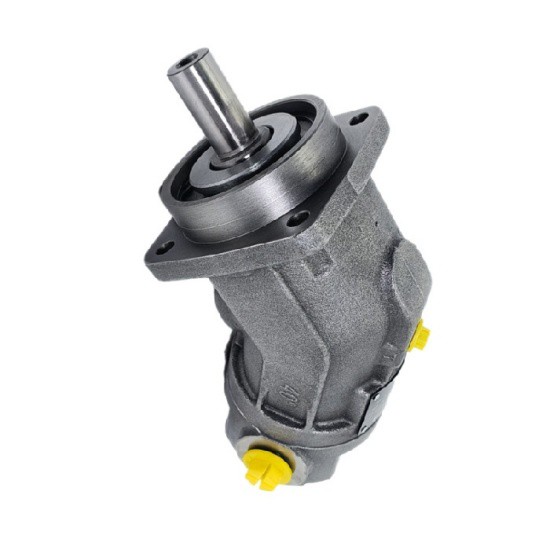
- Construction Equipment: Piston motors are used in excavators, bulldozers, and loaders to power the tracks, booms, and other moving parts. Their ability to deliver high torque at low speeds is essential for the heavy - lifting and earth - moving tasks performed by these machines.
- Mining Industry: In mining operations, piston motors are used in equipment such as drills, crushers, and conveyors. The high - pressure and high - torque capabilities of piston motors make them suitable for the harsh and demanding conditions of the mining environment.
- Marine Applications: Piston motors are used in marine propulsion systems, winches, and steering mechanisms. Their efficiency and reliability are crucial for ensuring the safe and smooth operation of ships and boats.
Vane Motors
Vane motors are often used in applications where the requirements for torque and pressure are relatively moderate. Some common applications include:
- Machine Tools: Vane motors are used in milling machines, lathes, and other machine tools to power the spindles and feed mechanisms. Their smooth torque delivery and moderate speed range make them suitable for these precision - machining applications.
- Automotive Accessories: Vane motors are used in power steering systems, windshield wipers, and other automotive accessories. Their compact size and relatively low cost make them a popular choice for these applications.
- Material Handling Equipment: In some light - to - medium - duty material handling equipment, such as small forklifts and conveyor systems, vane motors can provide the necessary power. Their simplicity and ease of maintenance are also advantages in these applications.
Cost Considerations
Piston motors are generally more expensive than vane motors. The complex design and high - precision manufacturing required for piston motors contribute to their higher cost. However, in applications where high performance, efficiency, and reliability are critical, the higher upfront cost of a piston motor can be justified by the long - term savings in energy consumption and reduced maintenance requirements.
Vane motors, on the other hand, are more cost - effective. Their simpler design and lower manufacturing costs make them an attractive option for applications where the performance requirements are not as demanding.
Conclusion
In summary, the choice between a piston motor and a vane motor depends on various factors, including the required torque, speed range, efficiency, application, and cost. As a piston motor supplier, I understand the importance of selecting the right motor for your specific needs. If you have a heavy - duty application that requires high torque, a wide speed range, and high efficiency, a piston motor is likely the better choice. On the other hand, if your application has moderate requirements and cost is a major consideration, a vane motor may be more suitable.
If you are interested in learning more about our piston motors or need help in choosing the right motor for your application, please feel free to contact us for procurement and further discussion. We are committed to providing you with high - quality products and professional technical support.
References
- Fluid Power Handbook, various authors
- Hydraulic System Design and Application Guide, industry publication