

How to select the appropriate actuator for an HMI Cylinder?
Aug 28, 2025
Selecting the appropriate actuator for an HMI (Human-Machine Interface) cylinder is a crucial decision that can significantly impact the performance and efficiency of your industrial operations. As an HMI Cylinder supplier, I've seen firsthand how the right actuator can make a world of difference, and the wrong one can lead to headaches and inefficiencies. In this blog, I'll share some tips on how to choose the best actuator for your HMI cylinder needs.
Understanding the Basics of HMIs and Cylinders
Before we dive into actuator selection, let's quickly go over what HMIs and cylinders are. An HMI is a device that allows humans to interact with machines. It can be a touchscreen, a control panel, or any other interface that enables operators to input commands and receive feedback from the machine.
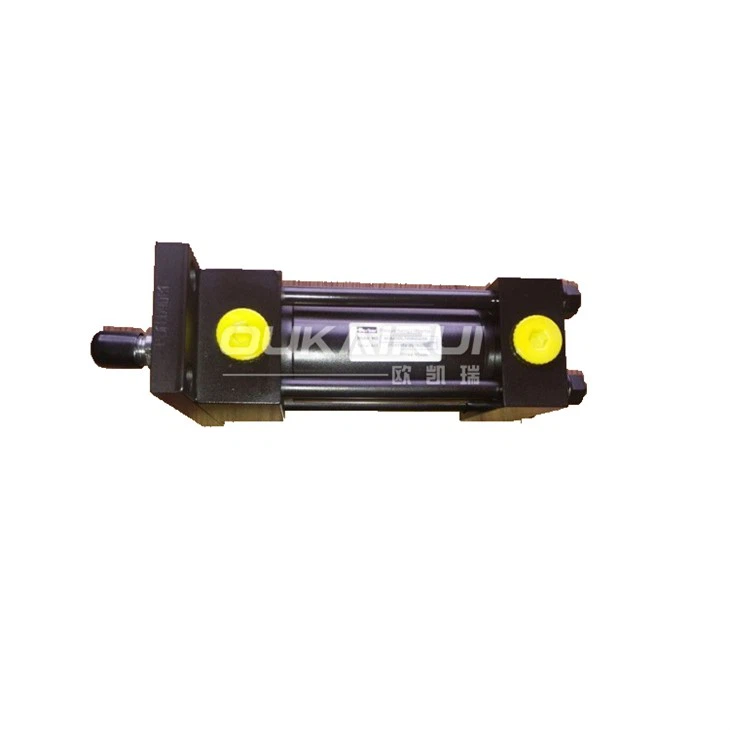
Cylinders, on the other hand, are mechanical devices that convert fluid power into linear motion. They're commonly used in industrial applications to move, lift, or push heavy loads. When paired with an HMI, cylinders can be precisely controlled to perform specific tasks, making them a vital component in many automated systems.
Factors to Consider When Selecting an Actuator
Now that we have a basic understanding of HMIs and cylinders, let's look at the key factors to consider when choosing an actuator:
1. Force Requirements
The first thing you need to determine is the amount of force the actuator needs to generate. This will depend on the specific application and the load the cylinder will be moving. You'll need to calculate the force required to move the load, taking into account factors like friction, gravity, and acceleration.
For example, if you're using the cylinder to lift a heavy object, you'll need an actuator that can generate enough force to overcome the weight of the object and any additional resistance. On the other hand, if the cylinder is used for a lighter task, like opening a valve, a lower-force actuator may be sufficient.
2. Stroke Length
The stroke length refers to the distance the actuator can move the cylinder's piston. It's important to choose an actuator with a stroke length that matches your application requirements. If the stroke length is too short, the cylinder won't be able to complete the desired movement. Conversely, if it's too long, it may lead to unnecessary complexity and increased costs.
Consider the range of motion needed for your application and select an actuator with a stroke length that allows for that movement. Make sure to also account for any additional space requirements, such as clearance for the actuator and the cylinder when fully extended.
3. Speed and Precision
The speed at which the actuator can move the cylinder and the precision of that movement are also important considerations. Some applications require fast and rapid movements, while others need slow and precise positioning.
If your application requires high-speed operation, you'll need an actuator that can provide quick acceleration and deceleration. Look for actuators with high flow rates and efficient control systems. On the other hand, if precision is the key, choose an actuator that offers accurate position control and minimal backlash.
4. Environmental Conditions
The environment in which the actuator will operate can have a significant impact on its performance and lifespan. Consider factors like temperature, humidity, dust, and corrosive substances.
For example, if the actuator will be used in a harsh industrial environment with high temperatures and dust, you'll need an actuator that's designed to withstand these conditions. Look for actuators with robust enclosures, sealed components, and high-temperature ratings.
5. Compatibility with HMI
It's essential to ensure that the actuator is compatible with your HMI system. The actuator should be able to communicate effectively with the HMI, allowing for seamless control and monitoring.
Check the communication protocols supported by the actuator and make sure they match those of your HMI. Some common communication protocols include Modbus, Profibus, and Ethernet/IP. Additionally, consider the software and programming requirements for integrating the actuator with the HMI.

Types of Actuators for HMI Cylinders
There are several types of actuators available for HMI cylinders, each with its own advantages and disadvantages. Here are some of the most common types:
1. Pneumatic Actuators
Pneumatic actuators use compressed air to generate force and move the cylinder. They're relatively simple, cost-effective, and easy to install. Pneumatic actuators are suitable for applications that require fast and repetitive movements, such as in packaging and assembly lines.
However, pneumatic actuators may not be the best choice for applications that require high precision or large forces. They also rely on a compressed air supply, which can be a limitation in some environments.
2. Hydraulic Actuators
Hydraulic actuators use hydraulic fluid to generate force. They're capable of generating high forces and are suitable for heavy-duty applications, such as in construction equipment and industrial presses.
Hydraulic actuators offer excellent precision and control, but they can be more complex and expensive than pneumatic actuators. They also require a hydraulic power unit and proper maintenance to ensure reliable operation.
3. Electric Actuators
Electric actuators use an electric motor to drive the cylinder. They offer precise control, high efficiency, and can be easily integrated with HMI systems. Electric actuators are suitable for applications that require accurate positioning and variable speed control.
However, electric actuators may have limitations in terms of force output compared to hydraulic actuators. They also require a reliable power supply and may be more sensitive to electrical interference.
Examples of Cylinders and Their Suitable Actuators
Let's take a look at some examples of cylinders and the types of actuators that are commonly used with them:
- 2HP Cylinder: This cylinder is often used in medium-duty applications. For this type of cylinder, a pneumatic actuator can be a good choice if the force requirements are relatively low and the application requires fast movements. If higher forces are needed, a hydraulic actuator may be more appropriate.
- 3L Cylinder: The 3L Cylinder is suitable for a wide range of applications. For light to medium loads and applications that require precise positioning, an electric actuator can provide excellent control. For heavier loads, a hydraulic actuator may be the better option.
- 35Z - 1 Cylinder: This cylinder is typically used in heavy-duty applications. A hydraulic actuator is usually the best choice for this type of cylinder due to its ability to generate high forces and provide precise control under heavy loads.
Making the Right Decision
Selecting the appropriate actuator for your HMI cylinder is a multi-faceted decision that requires careful consideration of the factors mentioned above. It's important to take the time to understand your application requirements and evaluate the different types of actuators available.
If you're unsure which actuator is the best fit for your needs, don't hesitate to reach out to us. As an HMI Cylinder supplier, we have the expertise and experience to help you make an informed decision. We can provide you with detailed information about our products, offer technical support, and even assist with the installation and integration process.
Conclusion
Choosing the right actuator for an HMI cylinder is a critical step in ensuring the optimal performance of your industrial systems. By considering factors like force requirements, stroke length, speed, precision, environmental conditions, and compatibility with the HMI, you can select an actuator that meets your specific needs.
Whether you're looking for a pneumatic, hydraulic, or electric actuator, we're here to help. Contact us today to discuss your requirements and start the process of selecting the perfect actuator for your HMI cylinder. Let's work together to improve the efficiency and productivity of your operations.
References
- "Industrial Automation Handbook"
- "Actuators in Fluid Power Systems"
- Manufacturer's specifications for various actuators and cylinders